
Home › Therapy for Anxiety & Depression in Spokane
Therapy for Anxiety & Depression in Spokane
Our patterns—thoughts, feelings and ways of interacting—serve a purpose and hold meaning. Sometimes we get stuck in them, especially during anxiety, depression or a difficult life transition.
 Kathryn Bradford, MA, LMHC, NCC
In person in Spokane · Telehealth across Washington
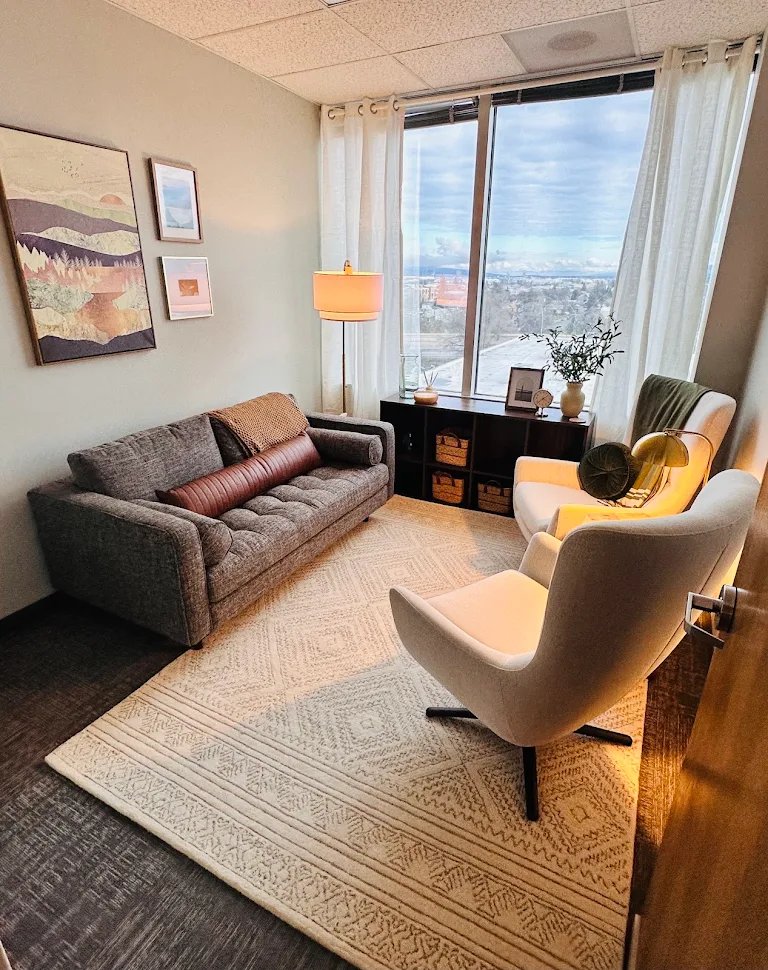
A warm, inclusive space.
Depression and anxiety are among my top specialties. I pair evidence-based interventions with a personalized and warm approach to meet you where you're at and gain an understanding of where you want to go.
We will explore previous and current patterns in your life and relationships to understand what is working and what needs to be updated. My approach is rooted in attachment science and family systems, and I also draw on Internal Family Systems (IFS) and narrative approaches. You'll experience a safe and welcoming therapeutic relationship.
Your first steps.
Free consultation
A 15-minute call to ask questions and see whether we're a good fit.
First session
We get to know your story, goals and what brings you in. [Intake length/fee — Kathryn to confirm]
Ongoing sessions
In person in Spokane or online anywhere in Washington. Session frequency: [TBD with Kathryn]
Clear, upfront fees.
My practice is private-pay only and is not in-network with any insurance companies. Please reach out to discuss sliding-scale options.
Sliding scale: apply if you may be eligible.
Payment methods: American Express, Cash, Check, Discover, Health Savings Account, Mastercard, Visa. All fees
| Free consultation (15 min) | $0 |
| Individual session | $175 |
Common questions
Do you take insurance?
No. The practice is private-pay only and is not in-network with any insurance companies. HSA cards are accepted, and you can reach out to discuss sliding-scale options.
Is online therapy available?
Yes—in person in Spokane or via telehealth anywhere in Washington State.
What if I'm in crisis?
This practice can't respond to emergencies. Call or text 988 (Suicide & Crisis Lifeline) or call 911.
Who do you work with?
Teens, college students and adults of all ages, including older adults working through life transitions.